NANAIMO, BC – A Nanaimo company that develops equipment for hazardous and hard-to-reach environments has secured an order from NASA, adding a space-related milestone to its growing portfolio of ocean, defence and industrial technology.
Reach Systems designs and manufactures remote winches, cable reel systems, cameras and robotic crawlers used in applications where people cannot safely access the work area.
Its equipment is used in ocean research, commercial diving, inspection, defence and autonomous systems. The company is part of a growing Nanaimo technology cluster that also includes SEAMOR Marine and Shift Coastal Technologies.
Founded five years ago by Colin Dobell, Reach Systems was created after years of experience in the remote robotics industry. Dobell previously worked at Inuktun Services, where he encountered repeated challenges finding cable reel and winch products suited to specialized field applications.
He established Reach to develop systems for original equipment manufacturers that could be integrated into their own robotic and remote-control platforms. The company later expanded into cameras and robotic crawlers.
NASA order
NASA has ordered a customized version of Reach Systems’ CROC XL tether management system, modified to integrate with a NASA motor.
The equipment is intended to support a ground-based technology demonstration on Earth involving cable deployment and equipment connections associated with Artemis activities.
It remains uncertain whether the Reach hardware will eventually be used on the moon.
Dobell said controlled deployment and recovery of cable can be a significant engineering challenge in complex operations, regardless of whether the equipment is being used underwater, on a vessel or during a land-based test.
“A winch may look simple from the outside, but the engineering behind controlled payout, recovery, integration, connectivity and reliability becomes increasingly important as systems become more capable,” he said.
Manufacturing in Nanaimo
Reach Systems operates from about 3,600 square feet of office and manufacturing space and has its own small machine shop.
The company expects to nearly double its footprint within the year as it expands production.
Dobell said keeping manufacturing and engineering operations in Nanaimo allows the company to incorporate lessons from field deployments directly into product development.
Three Reach employees are graduates of Vancouver Island University’s computer science program. Dobell said the availability of skilled workers in Nanaimo has increased since his days at Inuktun.
Reach is also drawing on experience from its predecessor company. Seven former Inuktun employees now work at Reach, bringing experience in robotics and remote systems.
Dobell joined Inuktun in 1996 and eventually became its owner. The company expanded its workforce and product offerings before being acquired by Eddyfi Technologies.
Building a local supply chain
Reach works with a number of Nanaimo-area suppliers and service providers, including Unlimited Fab, Dueck Manufacturing, Motion, Industrial Plastics, ACE, Allegra Printing and Five Star Embroidery.
Dobell said the company would like to see more specialized manufacturing services available locally. Contract anodizing, for example, is currently sourced outside of Vancouver Island.
He said access to skilled engineers and tradespeople, additional manufacturing space and a broader supplier network will be important as Reach grows.
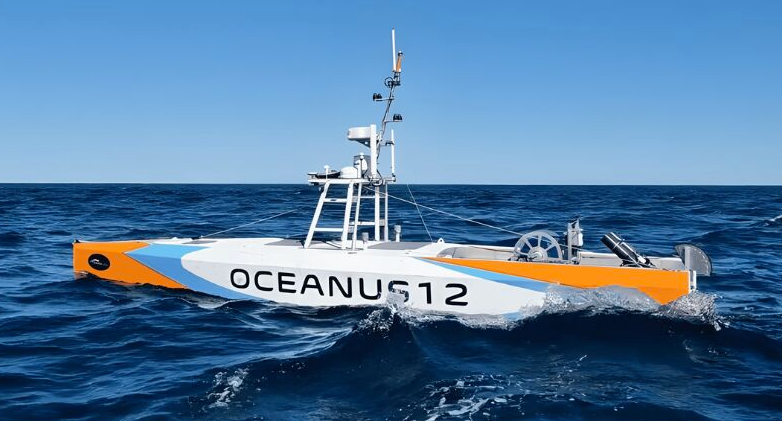
Built by Open Ocean Robotics, this platform integrates Reach Systems winch technology to support controlled, unattended operations at sea (Photo Credit: Reach Systems)
Expanding underwater technology
The company’s work is also extending into underwater sensing.
Reach has partnered with Shift Coastal Technologies and Sensor Technology, an array manufacturer with operations in Eastern Canada, on a project supported by Canada’s Ocean Supercluster.
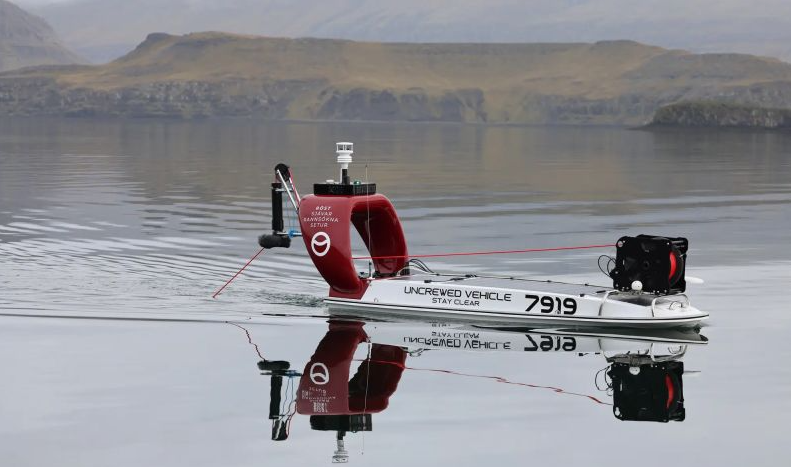
The companies demonstrated a system designed to remotely and autonomously deploy thin-line hydrophone arrays, which can be used to detect underwater sounds, including those associated with vessels and submarines.
A similar demonstration was conducted in Portugal in 2025 with ZeroUSV, a company that develops uncrewed surface vessels capable of deploying and recovering towed sonar arrays.
The technology has potential applications in areas such as environmental monitoring, whale tracking and defence applications.
Next steps
Reach plans to upgrade its camera product line this fall and introduce a new series of remote winches designed to deploy hydrophone arrays from uncrewed surface vessels.
The company is also exploring industrial uses for its robotic systems.
One early project involves a proof of concept for robotic silo cleaning for a distributor serving the Brazilian market.
For Dobell, the company’s development reflects both the opportunities and challenges facing Nanaimo’s advanced manufacturing sector.
While the city may not have the same aerospace or technology profile as larger Canadian centres, he said Nanaimo’s growing pool of technical talent and established manufacturing expertise provide a foundation for companies developing specialized products for international markets.
Reach’s NASA order adds another example of Nanaimo-built technology finding applications well beyond Vancouver Island.