BRITISH COLUMBIA – Lake Ontario has two official names now. Which one you see depends on which side of the border you’re standing on. Three days after that started, we asked five AI tools what they’d tell a Canadian about it.
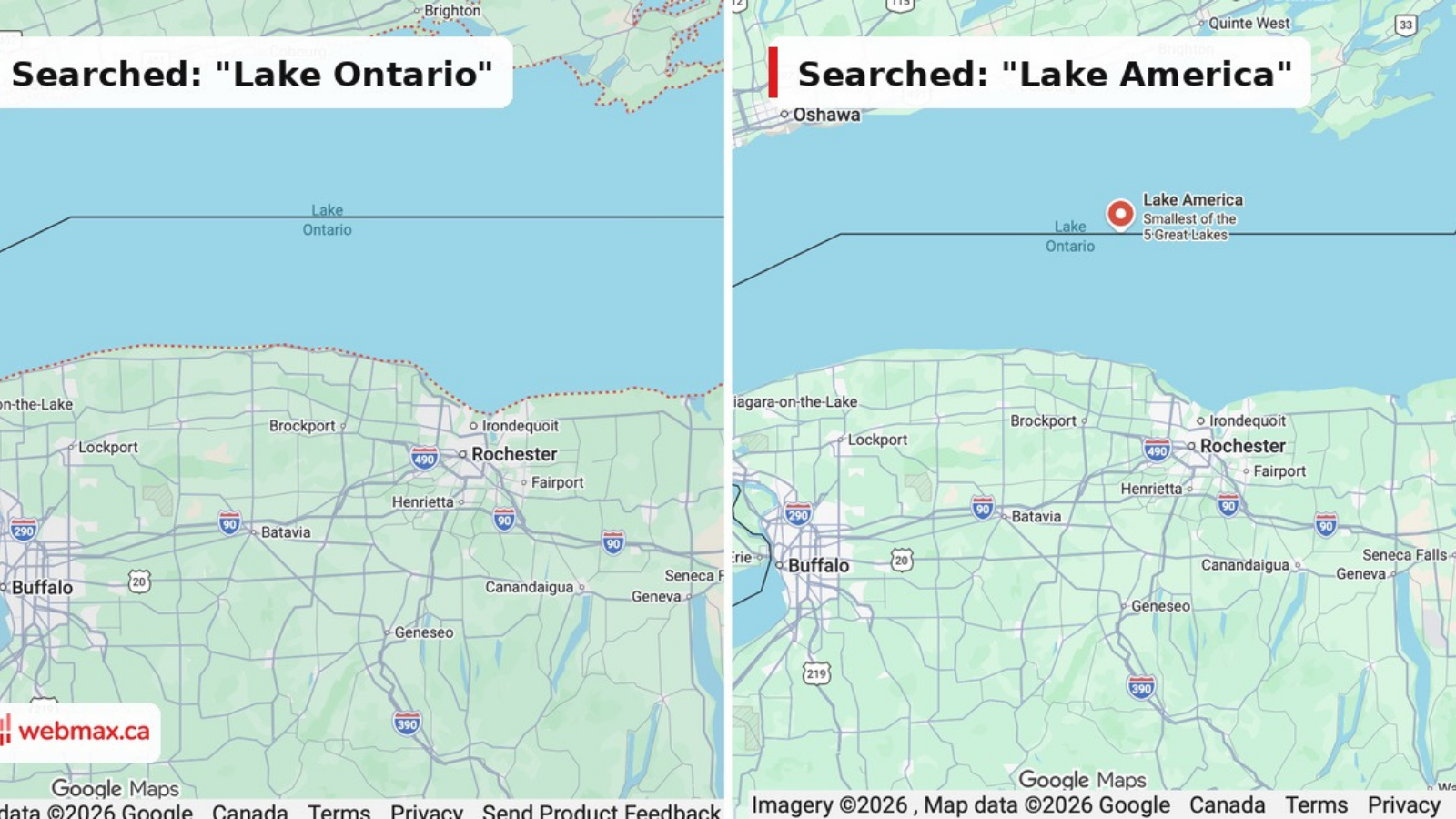
On August 27, 2026, a U.S. executive order directed American federal agencies to rename Lake Ontario as “Lake America.” Canada said no. Prime Minister Mark Carney pointed out that the name Ontario comes from an Indigenous word and has been in use for more than 400 years, longer than either country has existed.
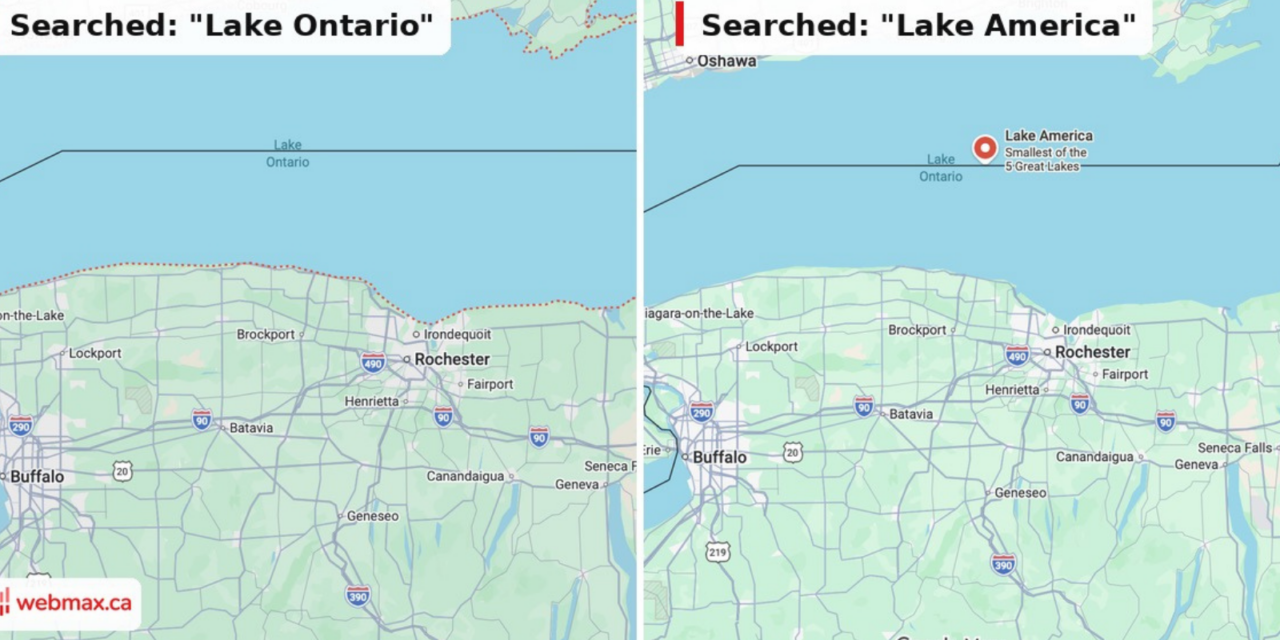
Then Google moved. On August 29 the company confirmed it was updating Google Maps to match the U.S. federal database. American users now see Lake America. Canadian users still see Lake Ontario. Everyone else sees both names on the same body of water. Apple Maps kept Lake Ontario, and MapQuest said publicly that it won’t make the change.
So the maps had split. That left an open question about the tools a lot of people now ask instead of opening a map at all.
On the morning of August 30 my company ran a small test. Five identical plain-language questions, put to five AI tools: ChatGPT, Gemini, Perplexity, Grok and Augure. We had planned on six. Claude got cut because we’d already talked the renaming through with it in an earlier session, so its answers weren’t a clean first read. The questions were the sort a normal person would ask, from “What’s the lake called between Toronto and New York?” through to “I run a small business near this lake in Canada. Should I change my website to say Lake America?”
The answers matched. All five named the lake as Lake Ontario, all five explained that Lake America applies to U.S. federal use only, and none of them treated the two names as two separate lakes. On the business question they gave the same advice, which was to keep Lake Ontario on the website. Gemini said it too, and that’s the part I keep coming back to. Google’s own AI told a Canadian business not to use the label now showing on Google’s own U.S. maps.
They got it right because they looked it up. Most of them searched the news before answering, and several cited what they found. A famous lake in a story the whole world was covering meant there was no shortage of accurate material to find.
One caveat. This was one day, five questions, five tools. It isn’t a scientific study, AI answers shift between sessions, and the same test run next month might read differently. But as a record of a strange week it holds up. Three days after one of the most publicized renamings anyone can remember, the tools people rely on had the facts right and agreed with each other.
For Ontario businesses near the water, none of this changes anything. Not the name your customers use, not the name on Canadian maps, and not the name that belongs on your website. What the label says depends on where the person reading it happens to be standing.
That’s a mapping problem, not a website problem.
SOURCE: Susan Jones, Co-Founder of WebMax Canada, a Victoria-based company that provides search and AI visibility services to small and medium sized businesses across Canada.
The full question set and responses are available at https://webmax.ca/blog/lake-ontario-or-lake-america-we-asked-6-ai-s