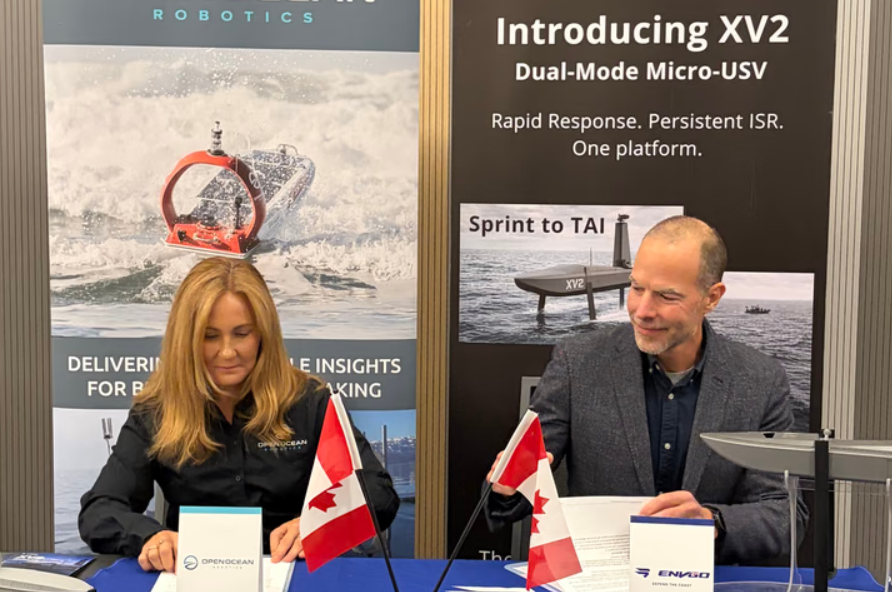
ENVGO and Victoria-based Open Ocean Robotics signed a memorandum of understanding on Oct. 7 at DEFSEC Atlantic in Halifax, bringing together their uncrewed surface vessels and maritime command-and-control technology. The agreement is intended to establish a Canadian-built approach to coordinating autonomous vessels for defence, security and other maritime operations.
Under the proposed collaboration, ENVGO’s high-speed hydrofoiling uncrewed surface vessels will be integrated with Open Ocean Robotics’ XplorerView command-and-control platform. The software is designed to manage multiple vessels and consolidate information from sensors, cameras, navigation systems and other data sources into a shared operational picture.
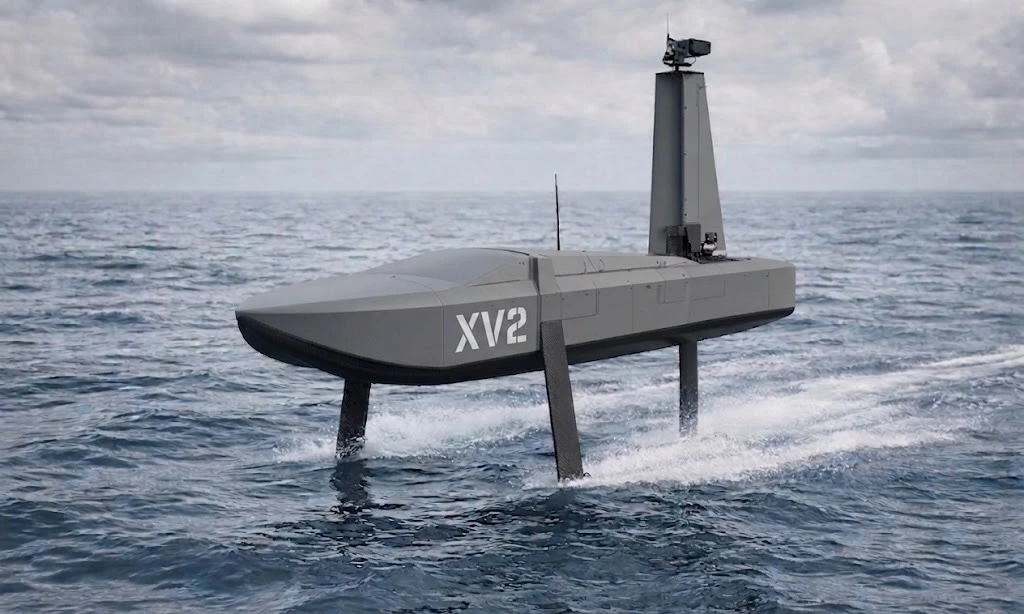
ENVGO Unveils XV2 Micro-USV
Photo Credit: ENVGO
The companies say the partnership could combine rapid deployment with extended surveillance. ENVGO’s XV2 micro-vessel is designed to travel quickly to a mission area before switching to a lower-speed mode for monitoring, while Open Ocean Robotics’ solar-powered vessels are built for longer-duration deployments.
The combined approach is intended to extend maritime monitoring without requiring additional crewed vessels or personnel aboard the uncrewed platforms. Potential applications include maritime security, intelligence gathering, surveillance and reconnaissance, as well as broader monitoring of coastal waters.
ENVGO is developing autonomous marine systems for defence, security and commercial markets. Its XV2 platform measures two metres in length and weighs 68 kilograms, allowing a single operator to deploy it with limited launch infrastructure. The company reports that the platform’s hydrofoil technology has completed more than 300 hours of testing and 1,000 kilometres of open-water operation.
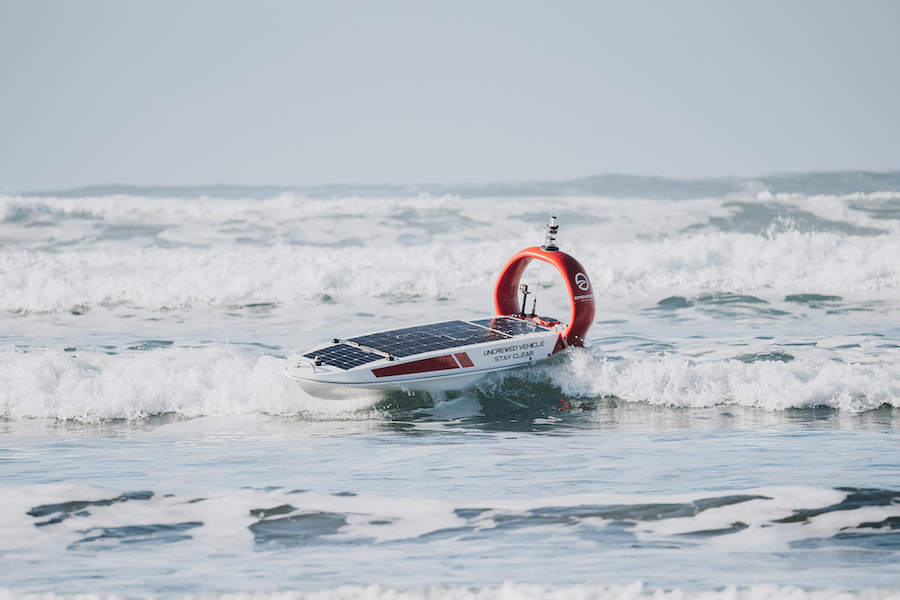
DataXplorer™
Solar-powered USVs
Photo Credit: Open Ocean Robotics
Open Ocean Robotics, headquartered in Victoria, develops solar-powered uncrewed surface vessels and software for persistent ocean monitoring. Its DataXplorer vessels have accumulated more than 13,000 operational hours across three ocean basins, according to the company. Its technology supports maritime security, environmental monitoring and ocean research.
The agreement comes as Canada increases its focus on domestic defence technology and autonomous systems. The Royal Canadian Navy is exploring uncrewed technologies across maritime environments, while Canada’s extensive coastline and Arctic approaches present challenges for persistent surveillance and monitoring.
The partnership could give the companies a way to combine their respective technologies for potential government and commercial customers. However, the memorandum of understanding establishes a framework for collaboration rather than confirming a procurement contract or completed system integration.
The companies plan to define integration milestones, technical interfaces and demonstration objectives. They are also holding private briefings with government, defence and industry representatives to discuss the proposed capabilities.
The collaboration highlights the role of Canadian technology companies in developing autonomous maritime systems and expanding domestic expertise in robotics, marine engineering and surveillance technology. Its next steps will centre on technical integration and demonstrations to assess how the platforms can operate together.
Photo Credit: ENVGO https://envgo.com/